
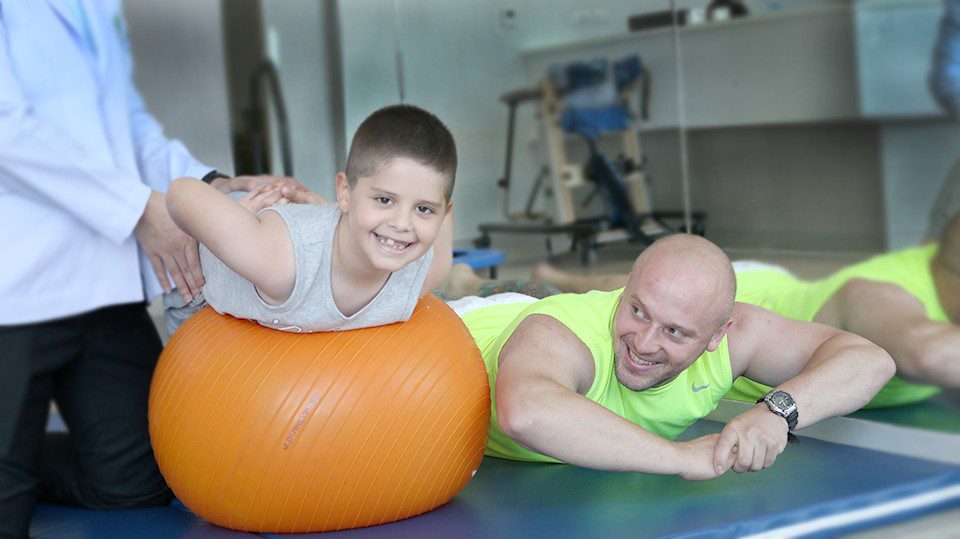
Cerebral palsy (CP) is a chronic neurological condition that develops due to early brain injury. For years, parents search for ways to improve their child’s condition, combining rehabilitation, physical therapy, massage, and medication support. In recent years, stem cell treatment for cerebral palsy has been actively discussed, as clinics worldwide publish data on possible improvements in motor and cognitive functions.
How Stem Cell Therapy Works in Cerebral Palsy
The method is based on the ability of stem cells to participate in regenerative processes and provide anti-inflammatory effects. In CP, the damage affects areas of the brain responsible for movement, coordination, and speech. Stem cells do not “rewrite” the brain from scratch, but they may:
- reduce inflammatory processes in nervous tissue;
- stimulate the formation of new neural connections;
- improve blood microcirculation;
- support recovery of damaged areas.
According to international clinical observations, improvements are reported in approximately 50–70% of patients after a therapy course. However, the degree of change depends on the type of CP, the child’s age, and the consistency of rehabilitation.
It is important to understand that the procedure itself is only one part of treatment. Without physiotherapy, sessions with a speech therapist, and neuropsychological support, significant results are unlikely.
Changes in Motor Functions
The most noticeable improvements most often relate to motor skills. For families whose child cannot sit independently or maintain balance, even small changes are highly meaningful.
After a therapy course, the following may be observed:
- Improved muscle tone, including reduced severe spasticity;
- Increased strength in the limbs;
- Better coordination of movements;
- Emergence of new skills such as rolling over, attempts to crawl, or supported steps.
According to several studies, children under the age of 7 show positive motor dynamics more frequently than adolescents. This is linked to higher brain plasticity in early childhood.
However, families may also face challenges. Sometimes changes develop gradually over 3–6 months. This can cause anxiety, as it may seem that there is no effect. In practice, improvement may accumulate progressively, especially if the child actively participates in rehabilitation.
Cognitive and Speech Improvements
Not only motor function may respond to treatment. Some patients demonstrate changes in cognitive abilities and speech development.
The most commonly observed improvements include:
- better concentration of attention;
- longer maintenance of eye contact;
- expansion of vocabulary;
- improved understanding of spoken language.
According to observational programs, cognitive improvements are recorded in approximately 40–60% of children after comprehensive treatment.
This is particularly important for families, as CP is often accompanied by developmental and speech delays. When a child begins to respond better to speech and interacts more easily with others, the overall quality of life for the entire family improves.
At the same time, it is necessary to realistically assess the situation: severe intellectual impairments do not completely disappear, but positive dynamics may occur.
Impact on Quality of Life
Even moderate changes can significantly influence daily life. This involves not only medical indicators but also practical aspects of care.
After therapy, families may notice:
- Easier caregiving due to reduced spasticity;
- Improved sleep patterns;
- Reduced frequency of seizures in some cases;
- Increased social activity.
According to international CP registries, improvement in quality of life is reported by most families, even when motor changes are moderate. In some cases, this is associated not only with physiological improvements but also with renewed hope and greater engagement in rehabilitation.
It is important to remember that stem cell therapy does not replace standard treatment. It is considered an additional method. The decision to undergo the procedure should be made after consultation with a neurologist and careful evaluation of clinical indications.
Limitations and Realistic Expectations
One of the main challenges is inflated expectations. Online sources may promise complete recovery, but scientific data suggest otherwise.
The following should be taken into account:
- Cerebral palsy does not completely “disappear”;
- results are individual;
- the effect may be moderate;
- long-term monitoring is required.
International medical communities emphasize that stem cell therapy remains an actively studied field. Despite encouraging data, more long-term research involving larger patient groups is necessary.
Stem cell treatment for cerebral palsy is a promising area of regenerative medicine that may provide positive dynamics in motor, cognitive, and behavioral domains. Improvements most often include reduced spasticity, development of new skills, and better quality of life. However, it is not a universal solution and does not replace rehabilitation. Maximum benefit is achieved through a comprehensive approach, early intervention, and realistic expectations.